
OpenMRS
A fully open-source medical record system designed for global healthcare needs, enabling facilities to efficiently capture, manage, and analyze patient data.
- Electronic medical record at the centre of Ozone, with the modern OpenMRS 3 (O3) interface
- Patient registration, search, identifiers and duplicate management
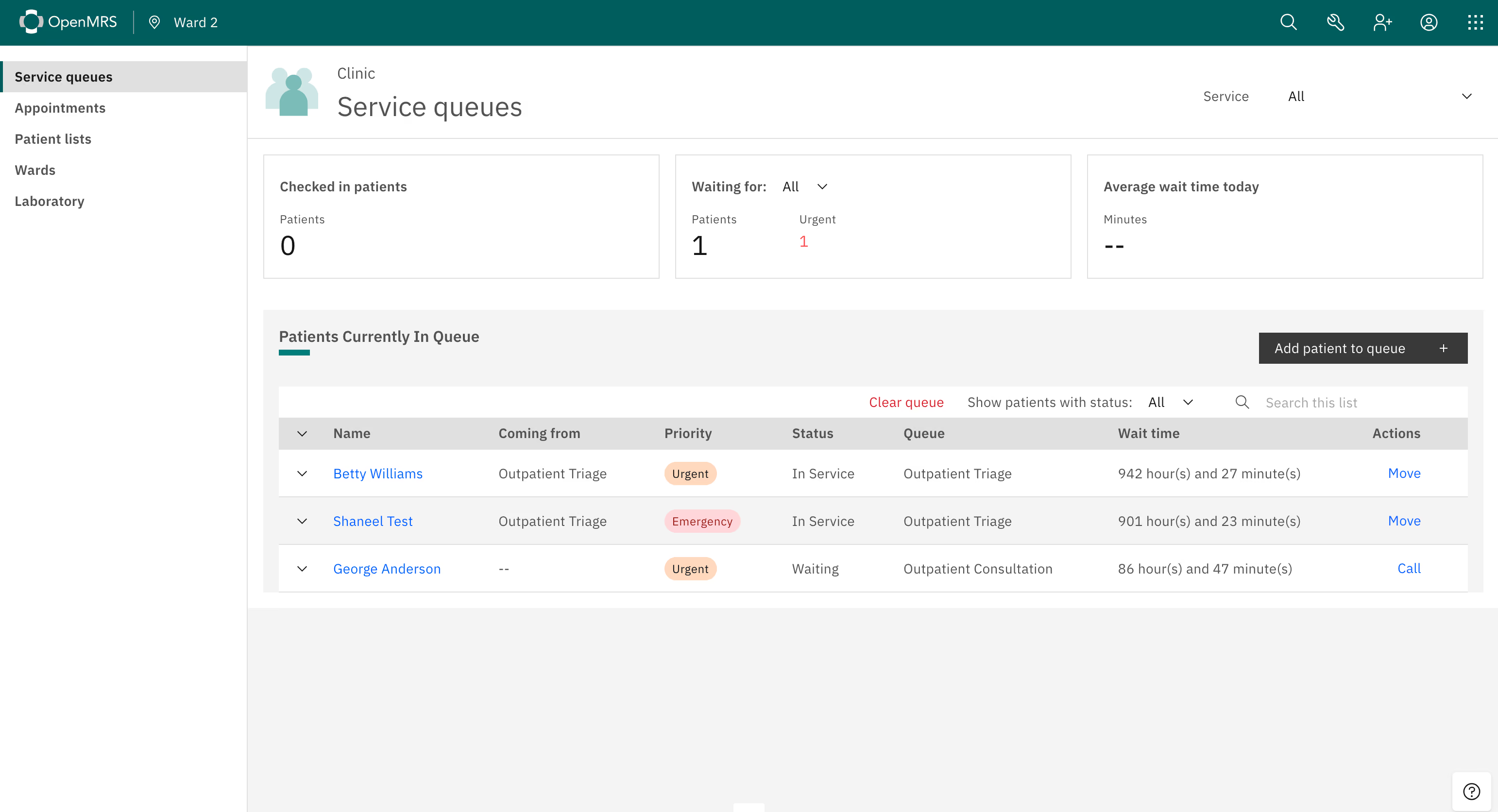
- Visits, appointments and service queues for patient flow
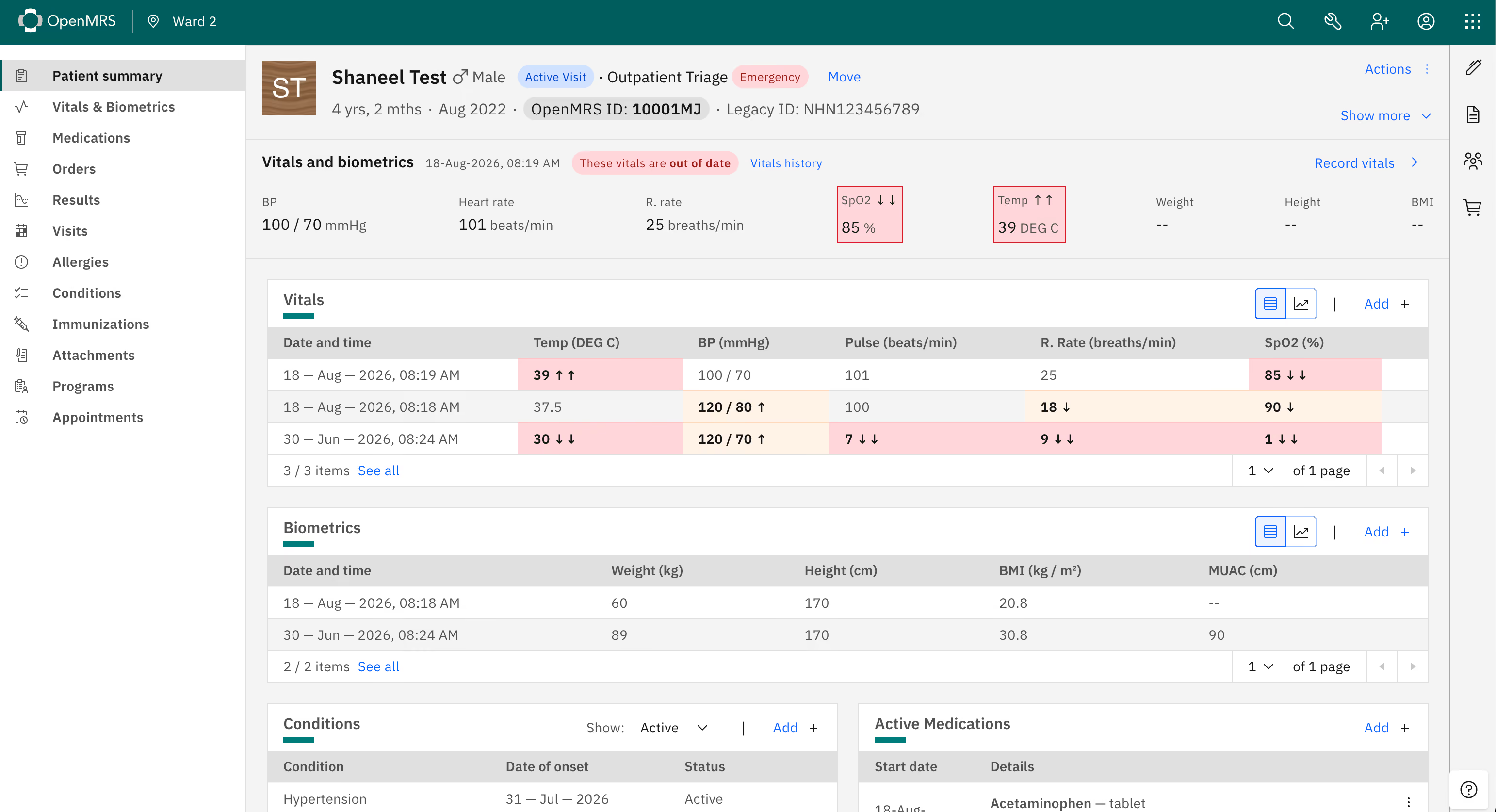
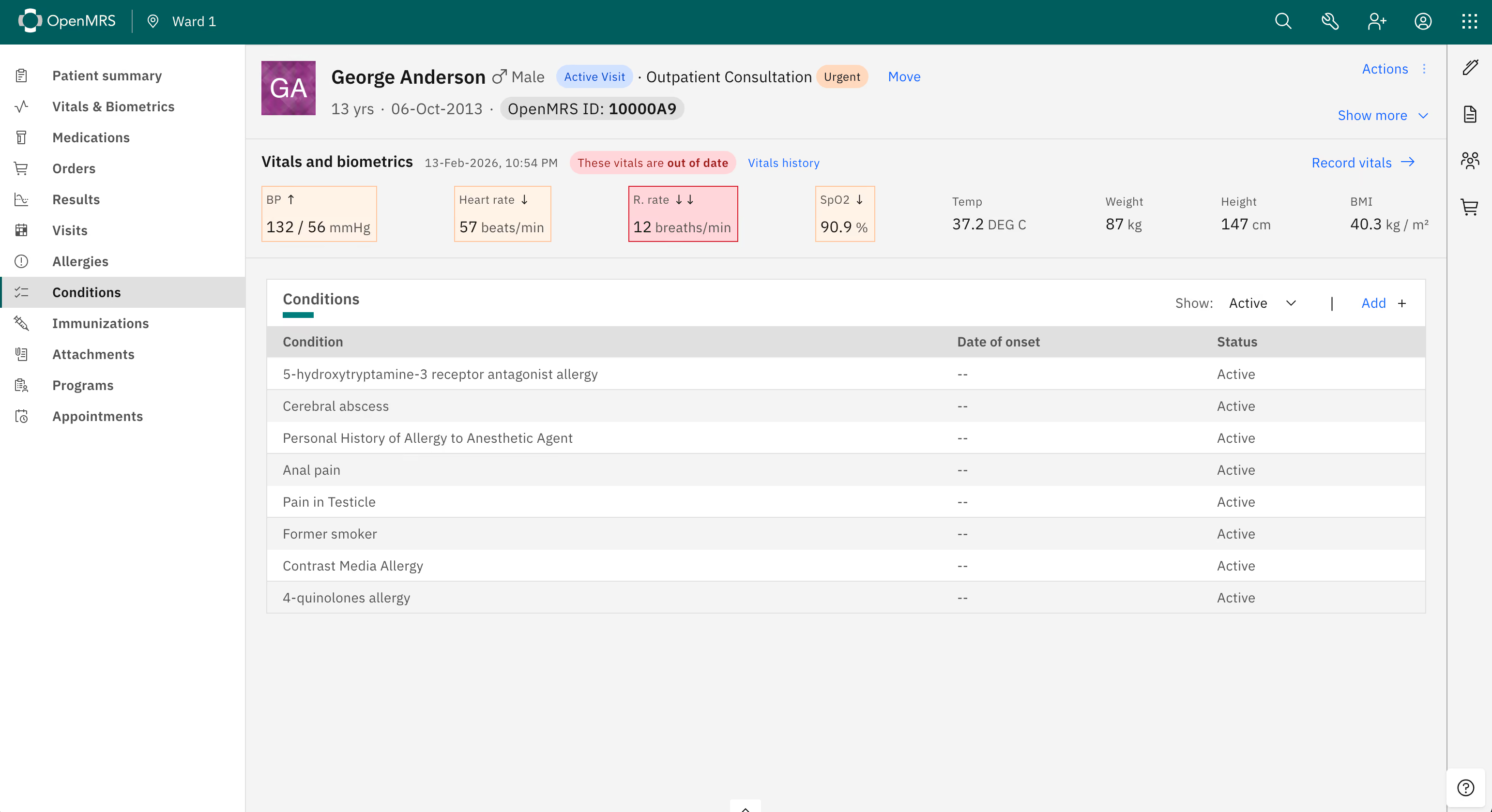
- Clinical charting: vitals, allergies, conditions, diagnoses, notes and visit history
- Configurable clinical forms built with the O3 Form Builder
- Medication, lab and imaging orders that flow to Ozone's pharmacy/ERP, lab and PACS apps
- Results and imaging studies returned to the patient chart
- Programme enrolment for long-term care (e.g. HIV, TB, maternal health)
- Ward and bed management for inpatient care
- Standards-based concept dictionary (CIEL, SNOMED CT, LOINC, ICD) and HL7 FHIR API
- Multilingual and offline-capable features for low-resource settings
OpenMRS was founded in 2004 by the Regenstrief Institute and Partners In Health to support HIV care in Africa. It is now stewarded by OpenMRS Inc., a US non-profit, and developed by a global community of implementers, developers and organisations, including Mekom Solutions, the creators of Ozone. Work is organised in open squads with public roadmaps and community calls, and the software is released under the Mozilla Public License 2.0 with a healthcare disclaimer. It is used in thousands of facilities across more than 80 countries.
- OpenMRS is Ozone's core app: every integration (lab, ERP, PACS, analytics) starts from OpenMRS data, so it must be up for the rest of the stack to work.
- Ozone ships the OpenMRS 3 frontend repackaged with Ozone configuration; Bahmni is the alternative EMR front end.
- Metadata (concepts, forms, locations, roles, order types) is loaded from configuration files through the Initializer module, so manage it in version-controlled config rather than by hand in the admin UI.
- Integrations read OpenMRS through its FHIR API and database change events; keep the FHIR2 module enabled and the database's binary logging configured as Ozone requires.
- Runs on Java/Tomcat with a MySQL or MariaDB database; this is the most critical database to back up.
- With SSO enabled, users sign in through Keycloak and are matched to OpenMRS users and providers.
- Choose your concept dictionary early (e.g. CIEL): concept mappings drive orders and results across every connected app.