
Orthanc
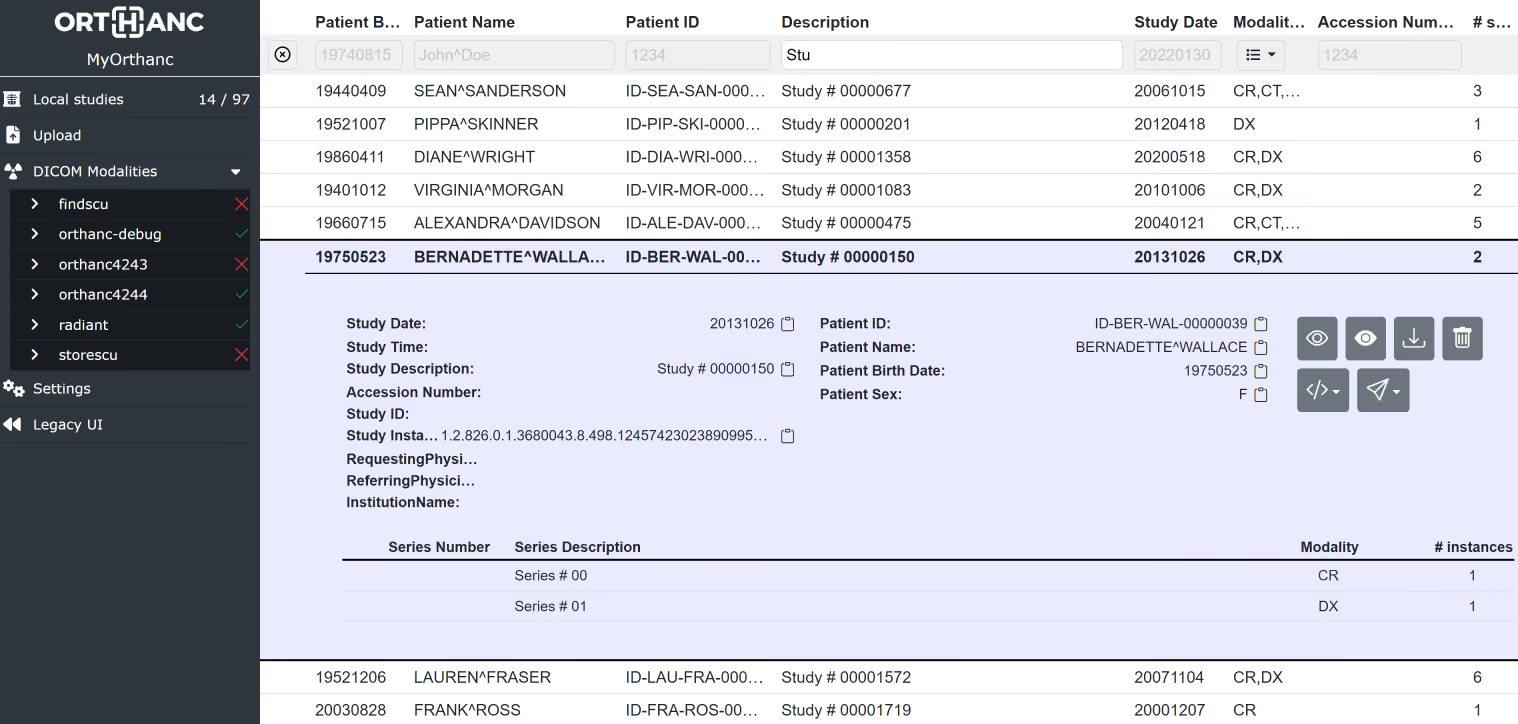
Orthanc is a lightweight, open-source DICOM server designed to simplify medical imaging management. It enables healthcare facilities to efficiently store, retrieve, and share DICOM images.
- Lightweight DICOM server (mini-PACS) that stores and serves medical images
- Receives images directly from modalities: X-ray, CT, MRI, ultrasound and more
- Standard DICOM networking (C-STORE, C-FIND, C-MOVE) and DICOMweb (QIDO-RS, WADO-RS, STOW-RS)
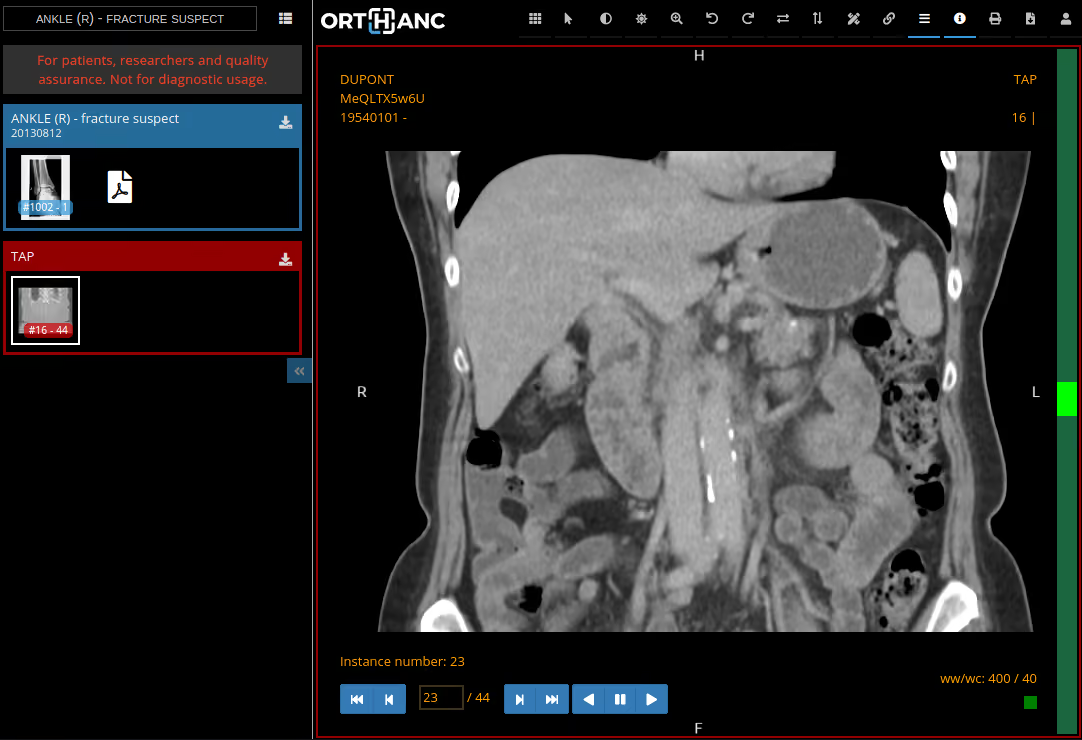
- Browser-based image viewing through viewer plugins (Stone Web Viewer, OHIF)
- Full REST API for automation and integration
- Imaging studies linked to the patient record in OpenMRS through Ozone
- Scripting with Lua or Python for routing, anonymisation and auto-forwarding
- Database and storage plugins (PostgreSQL, MySQL, object storage) for larger archives
Orthanc was created by Sébastien Jodogne at the University Hospital of Liège, Belgium, in 2012. It is now developed by Orthanc Team, a Belgian company, together with the UCLouvain university and community contributors. The core is free software under GPLv3, with plugins under GPL or AGPL, and releases ship several times a year.
- Ozone connects Orthanc to OpenMRS through its integration layer (EIP routes): imaging studies sync periodically from Orthanc to OpenMRS and appear as links in the patient file.
- Patient matching depends on identifiers: modalities or the worklist must send the OpenMRS patient ID in the DICOM PatientID tag, or studies will not link.
- Imaging is storage-heavy: plan disk capacity (a single CT study can exceed 500 MB), retention and off-site backup separately from other app data.
- Configure each modality's AE title, IP and port in Orthanc, and keep DICOM traffic on the internal network.
- The default SQLite index is fine for testing; switch to the PostgreSQL plugin in production.
- Viewers are for review, not certified primary diagnosis; check local regulatory requirements before radiologists report from them.